By the end of this unit, children will be able to:
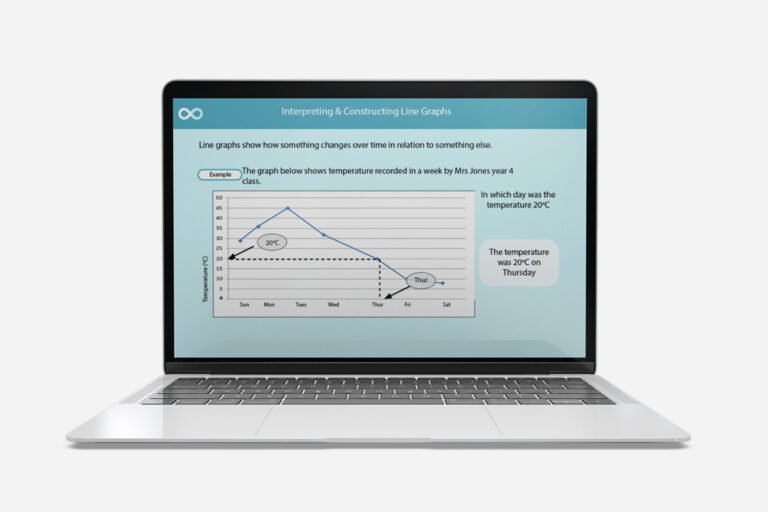
- Understand the concept of a line graph and its purpose in representing data over time.
- Identify and interpret key elements of a line graph, including axes, labels, and data points.
- Make predictions and draw conclusions based on the information presented in line graphs.
- Develop skills in reading and interpreting different types of data represented in line graphs, including numerical, categorical, and temporal data.
- Use line graphs to compare and contrast different sets of data, recognizing similarities and differences.
Curriculum Alignment: Year 4 Statistics:
- interpret and present discrete and continuous data using appropriate graphical methods, including bar charts and time graphs
- solve comparison, sum and difference problems using information presented in bar charts, pictograms, tables and other graphs