One-time purchase. Instant digital download.
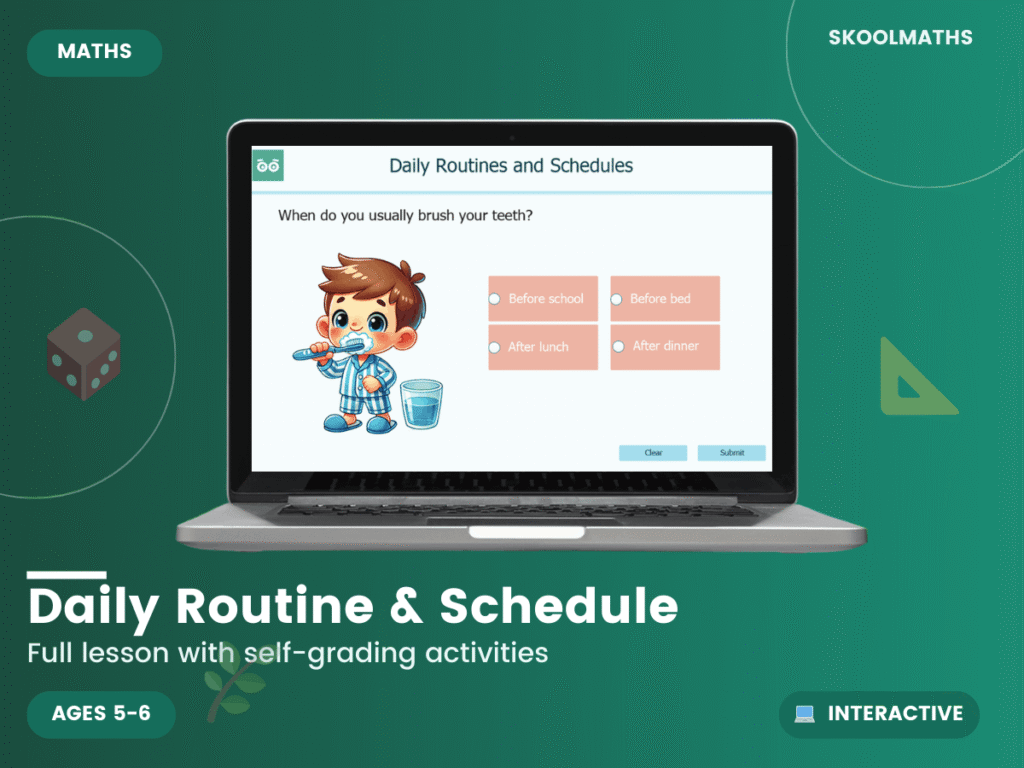
What do you do first in the morning? This 20-slide interactive lesson uses daily routines to help Year 1 children understand time and sequence.
Children build their understanding of daily routines and learn to use time vocabulary, sequencing with words such as before, after, morning, afternoon and evening. They decide which activity comes first or last in a day, drag pictures into before and after boxes, match activities to the time of day and complete sentences such as “This morning I…”. Reasoning questions ask them to work out times, such as when a party lasting 2 hours will end.
A dependable addition to a Year 1 measurement topic, giving children a friendly way into time through routines they know. Talking about the order and timing of the day supports later work on clocks and calendars.
Make time simple for young learners — Add to Basket.
What year group is this for? Year 1 (ages 5–6).
Does it cover time vocabulary? Yes — before, after, morning, afternoon and evening.
Is it self-marking? Yes, with instant feedback on the questions.
| Year Group | Year 1 Maths |
|---|---|
| Resource Type | 🎓 Interactive Lesson & Activities |
| Format | Digital Only |
| Curriculum | England & Wales — KS1 (Year 1) |
| Added | 4 March 2026 |
Membership unlocks this resource plus every lesson, worksheet and activity — all subjects, all year groups, all in one place.

Reviews
There are no reviews yet.