One-time purchase. Instant digital download.
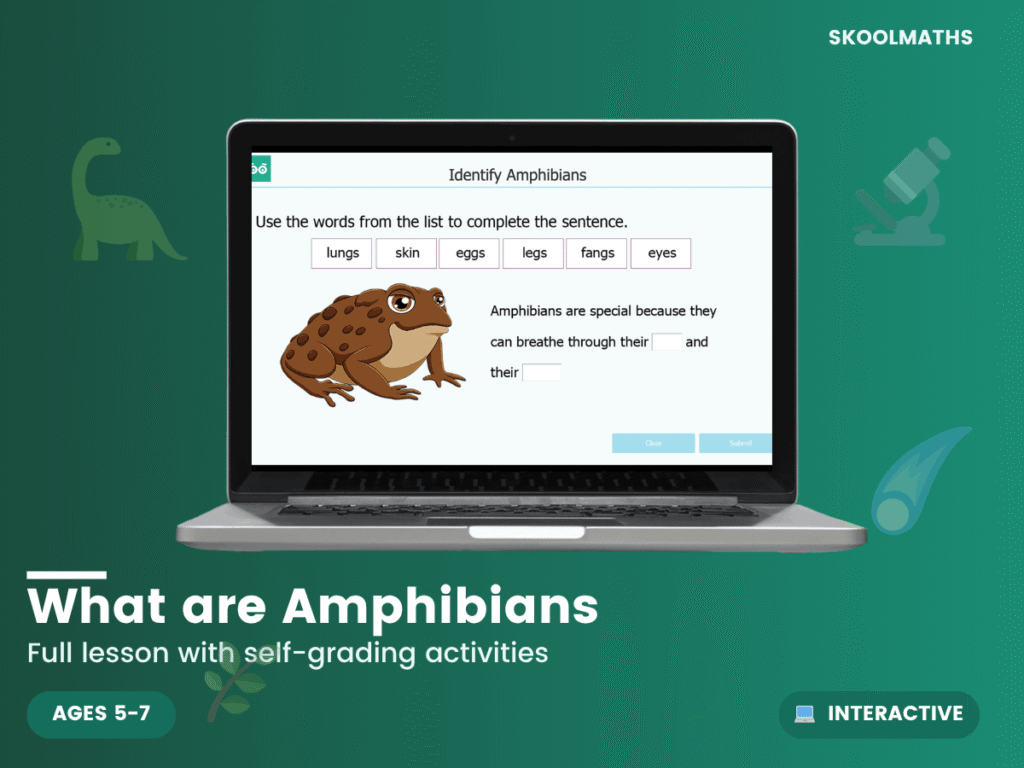
What do tadpoles have that adult frogs don’t? This 17-slide interactive lesson answers What are amphibians? and takes children from recognising them to understanding their life cycle.
Children learn to recognise common amphibians such as frogs, toads and salamanders, learn the key characteristics that define amphibians, including their ability to live both in water and on land, and gain a basic understanding of the variety of amphibians. They discover that amphibians can breathe through their skin as well as their lungs, and that baby amphibians such as tadpoles have tails that adult amphibians lose. Questions check identification skills, including recognising the poison dart frog among other animals.
A dependable addition to a KS1 science topic, giving children a clear introduction to amphibians and how they differ from other animal groups. Answering What are amphibians?, and comparing habitats and life cycles, builds the foundations for later biology.
Explore amphibians with confidence — Add to Basket.
What year group is this for?
KS1 — Years 1–2 (ages 5–7).
Does it cover the life cycle?
It introduces tadpoles as part of the amphibian life cycle.
Is it self-marking?
Yes, with instant feedback on the questions.
| Year Groups | Year 1–2 |
|---|---|
| Resource Type | 🎓 Interactive Lesson & Activities |
| Format | Digital Only |
| Curriculum | England & Wales — KS1 (Years 1–2) |
| Added | 4 March 2026 |
Membership unlocks this resource plus every lesson, worksheet and activity — all subjects, all year groups, all in one place.

Reviews
There are no reviews yet.