One-time purchase. Instant digital download.
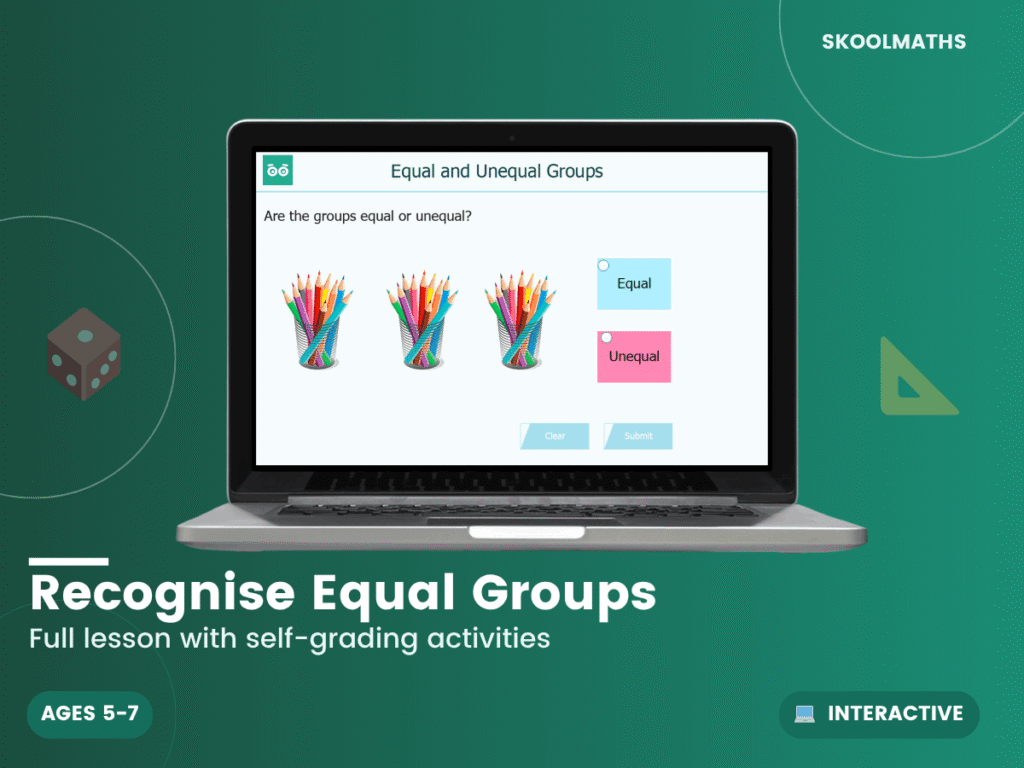
Can two groups be equal even if they look different? This 15-slide interactive lesson teaches recognising equal groups by challenging what ‘equal’ really means.
Children use pictures and concrete objects to help recognise equal groups, recognise and explain how they know when groups are or are not equal, and understand that groups can look different but still be equal in number. They decide whether groups of orange juice bottles, cans or red dice are equal, complete Jade’s drawing of equal groups of 4, and sort 15 pebbles into equal groups of 5 or 3. A reasoning question challenges the idea that groups which look different cannot be equal.
A dependable addition to a KS1 number topic, giving children a secure grasp of what ‘equal groups’ really means before formal multiplication begins. This understanding underpins arrays, times-tables and division later on.
Build confident grouping skills today — Add to Basket.
What year group is this for?
KS1 — Years 1–2 (ages 5–7).
Does it challenge a common misconception?
Yes — that equal groups must look identical.
Is it self-marking?
Yes, with instant feedback on the questions.
| Year Groups | Year 1–2 |
|---|---|
| Resource Type | 🎓 Interactive Lesson & Activities |
| Format | Digital Only |
| Curriculum | England & Wales — KS1 (Years 1–2) |
| Added | 4 March 2026 |
Membership unlocks this resource plus every lesson, worksheet and activity — all subjects, all year groups, all in one place.

Reviews
There are no reviews yet.