One-time purchase. Instant digital download.
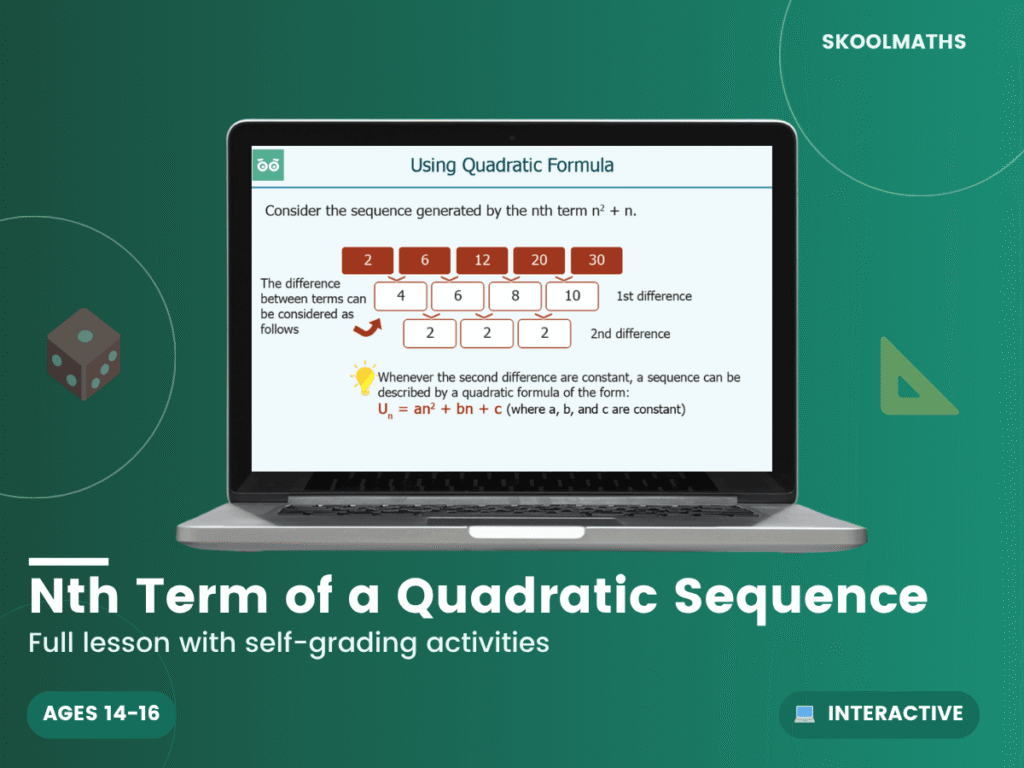
Still explaining why the second differences matter when a sequence isn’t linear? This substantial 27-slide interactive lesson gives pupils extensive, self-marking practice finding the nth term of a quadratic sequence.
Pupils practise using second differences to find the nth term of a quadratic sequence, building the fluency within the GCSE Maths curriculum’s algebra strand. This is a genuinely demanding higher-tier topic, and the substantial slide count gives pupils the extensive, varied practice needed to build real confidence.
A strong addition to a higher-tier GCSE algebra topic, whether taught as the main lesson or used for focused revision closer to an exam covering sequences and their underlying patterns in depth. Pupils who master finding the nth term of a quadratic sequence here carry that same second-differences thinking into later, more advanced sequence work.
Help your class master quadratic sequences today — Add to Basket.
What year groups is this for? GCSE (Years 10–11, ages 14–16).
What method does it teach? Using second differences to find the nth term of a quadratic sequence.
Is it self-marking? Yes, instant feedback throughout.
| Year Groups | Year 10–11 |
|---|---|
| Resource Type | 🎓 Interactive Lesson & Activities |
| Format | Digital Only |
| Curriculum | England & Wales — KS4 (Years 10–11) |
| Added | 4 March 2026 |
Membership unlocks this resource plus every lesson, worksheet and activity — all subjects, all year groups, all in one place.

Reviews
There are no reviews yet.