
Included in every Skoolmaths plan
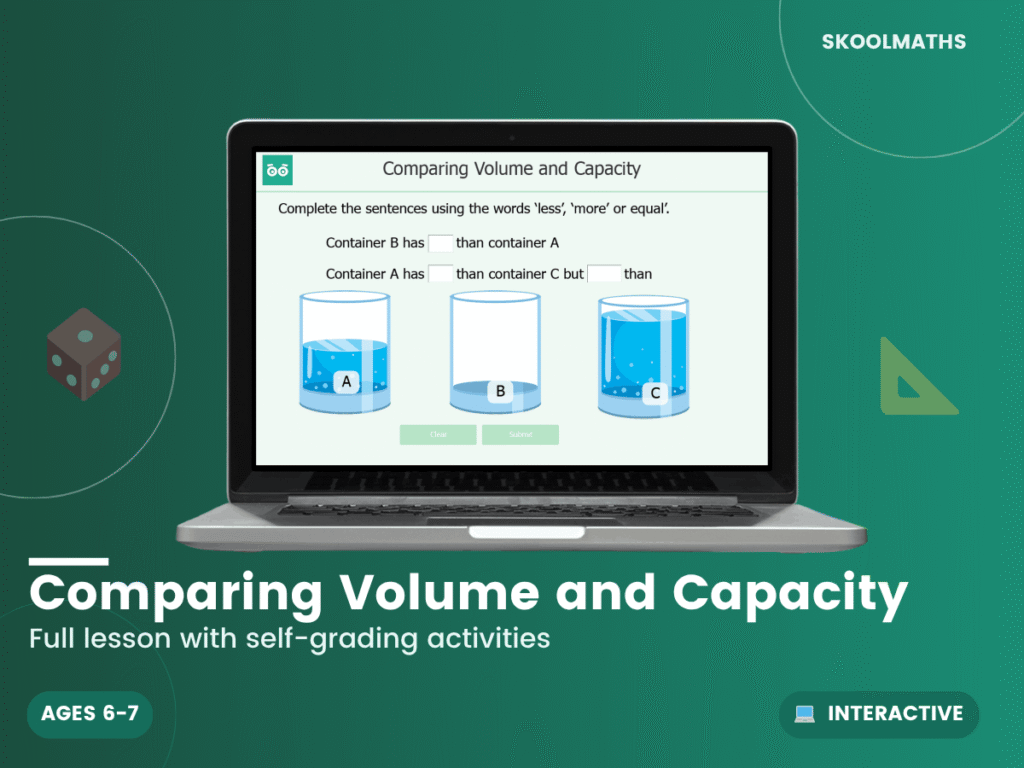
Which jug is half full, and which is nearly empty? This 23-slide interactive lesson teaches comparing volume and capacity using everyday containers pupils recognise.
Pupils learn to differentiate between capacity and volume, compare and order capacity using >, < and =, and use the language 'quarter', 'half', 'three-quarters' and 'full' to describe and compare volume. They select which jug is half or a quarter full, decide which beaker, teacup, kettle or pot holds more or less, and complete sentences comparing three containers using 'less', 'more' or 'equal'. Looking at three glasses of water, pupils decide which is half full, which is almost empty and which is almost full, building a feel for capacity that goes beyond exact numbers. A reasoning question then asks pupils to compare the amount of juice left in two identical bottles after Jibraan pours from them into two cups.
A dependable addition to a Year 2 measures topic, giving pupils the everyday language of capacity before moving on to standard units. Confident comparison here supports converting and calculating with litres and millilitres later on, and it gives pupils a practical sense of capacity they can use well beyond the maths lesson.
Build confident capacity skills today — Add to Basket.
What year group is this for?
Year 2 (ages 6–7), Key Stage 1.
Does it use the >, < and = symbols?
Yes — alongside everyday capacity language.
Is it self-marking?
Yes, with instant feedback on the questions.
| Year Group | Year 2 Maths |
|---|---|
| Resource Type | 🎓 Interactive Lesson & Activities |
| Format | Digital Only |
| Curriculum | England & Wales — KS1 (Year 2) |
| Added | 4 March 2026 |
Membership unlocks this resource plus every lesson, worksheet and activity — all subjects, all year groups, all in one place.
Reviews
There are no reviews yet.