One-time purchase. Instant digital download.
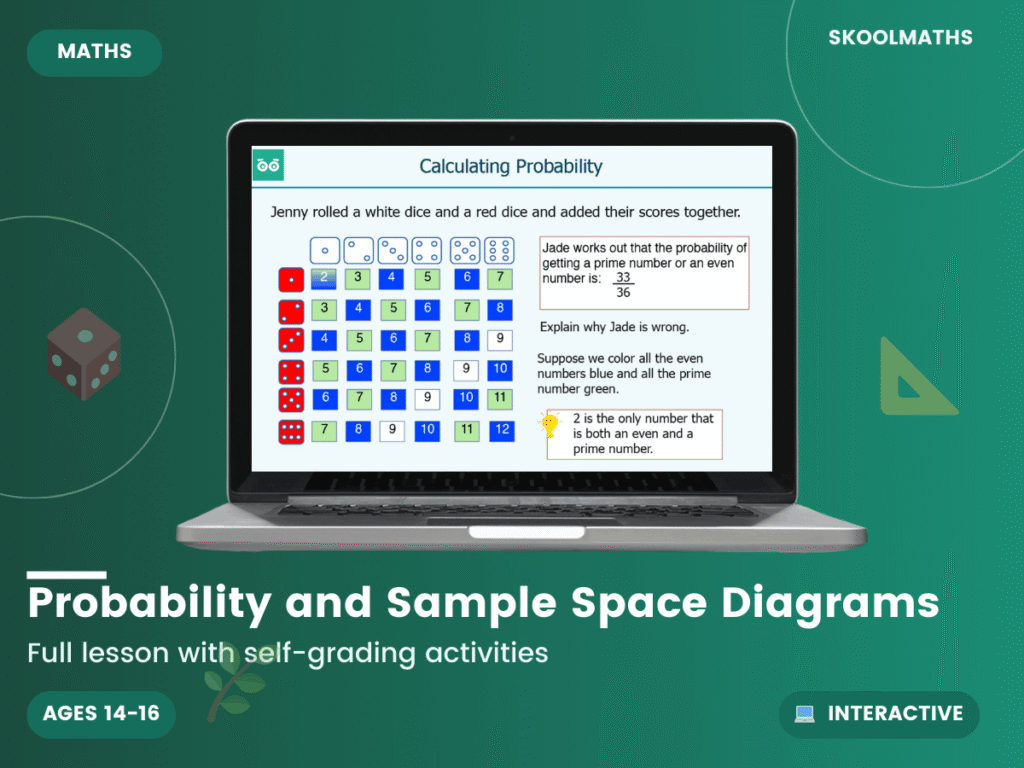
Still explaining how to list every possible outcome without missing any? This 27-slide interactive lesson gives pupils extensive, self-marking practice constructing and reading sample space diagrams.
Pupils practise constructing sample space diagrams to list all possible outcomes of combined events, building the probability fluency within the KS3 National Curriculum area of probability. Getting this systematic listing right is the foundation for almost every combined-probability calculation that follows, since a single missed or duplicated outcome throws off every calculation built on top of it. Building this habit early saves pupils from repeating the same mistake across an entire topic.
A strong addition to any KS3 probability unit, whether taught as the main lesson or used for focused revision practice ahead of an assessment covering combined events and every one of their outcomes.
Add to Basket today.
What year groups is this for? KS3 (Years 7–9, ages 11–14).
What does it teach? Constructing and reading sample space diagrams for combined events.
Is it self-marking? Yes, instant feedback throughout.
| Year Groups | Year 7–9 |
|---|---|
| Resource Type | 🎓 Interactive Lesson & Activities |
| Format | Digital Only |
| Curriculum | England & Wales — KS3 (Years 7–9) |
| Added | 4 March 2026 |
Membership unlocks this resource plus every lesson, worksheet and activity — all subjects, all year groups, all in one place.

Reviews
There are no reviews yet.