One-time purchase. Instant digital download.
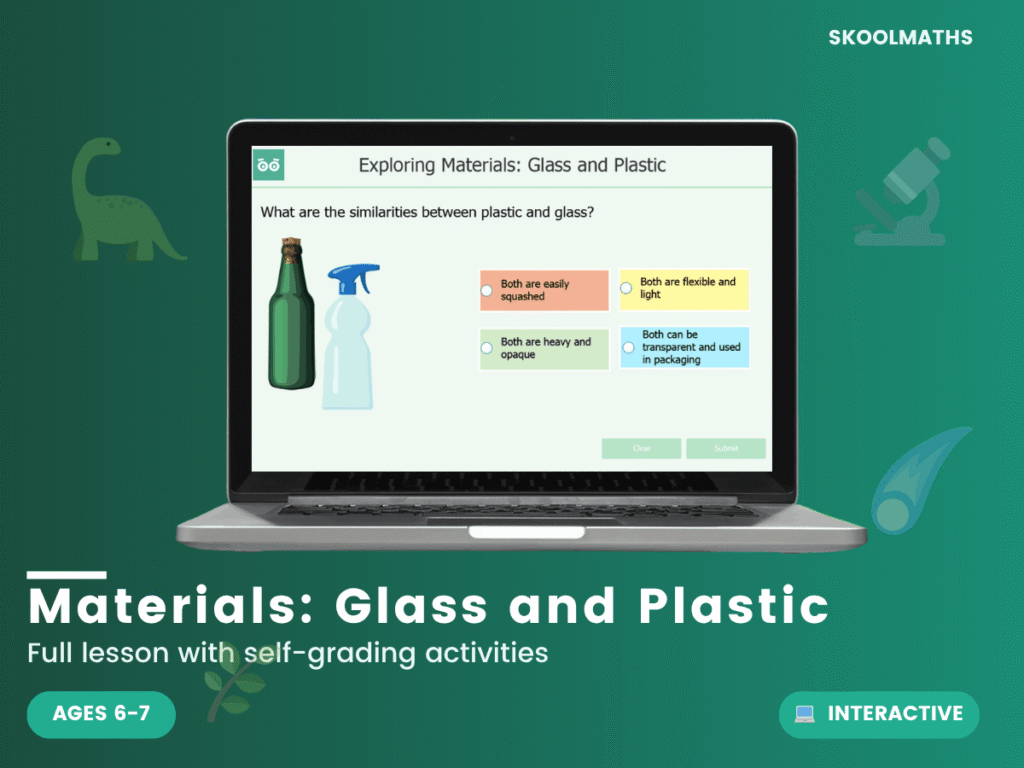
Why do we use plastic for a water bottle but glass for a jar of jam? This 25-slide interactive lesson explores glass and plastic materials by comparing their properties.
Children explore the properties and uses of glass and plastic, and conduct simple tests to understand their structure and characteristics. They learn that glass is hard, smooth and usually transparent, used for bottles, windows and jars, but fragile and can shatter, while plastic is light, strong, often flexible and used for bottles, bags and toys, without breaking as easily as glass. They also discover that glass does not conduct heat as well as metal, which is why glass cookware is unsuitable for very high-heat cooking, and learn how different jobs call for different materials.
A dependable addition to a Year 2 science topic, giving children a hands-on understanding of why materials are chosen for particular jobs. This pairs naturally with the wider identifying materials lesson for a full materials topic.
Explore materials with confidence — Add to Basket.
What year group is this for?
Year 2 (ages 6–7), KS1.
Does it explain why glass is fragile?
Yes — including why it shatters and how it compares to plastic.
Is it self-marking?
Yes, with instant feedback on the questions.
| Year Group | Year 2 Science |
|---|---|
| Resource Type | 🎓 Interactive Lesson & Activities |
| Format | Digital Only |
| Curriculum | England & Wales — KS1 (Year 2) |
| Added | 4 March 2026 |
Membership unlocks this resource plus every lesson, worksheet and activity — all subjects, all year groups, all in one place.

Reviews
There are no reviews yet.