One-time purchase. Instant digital download.
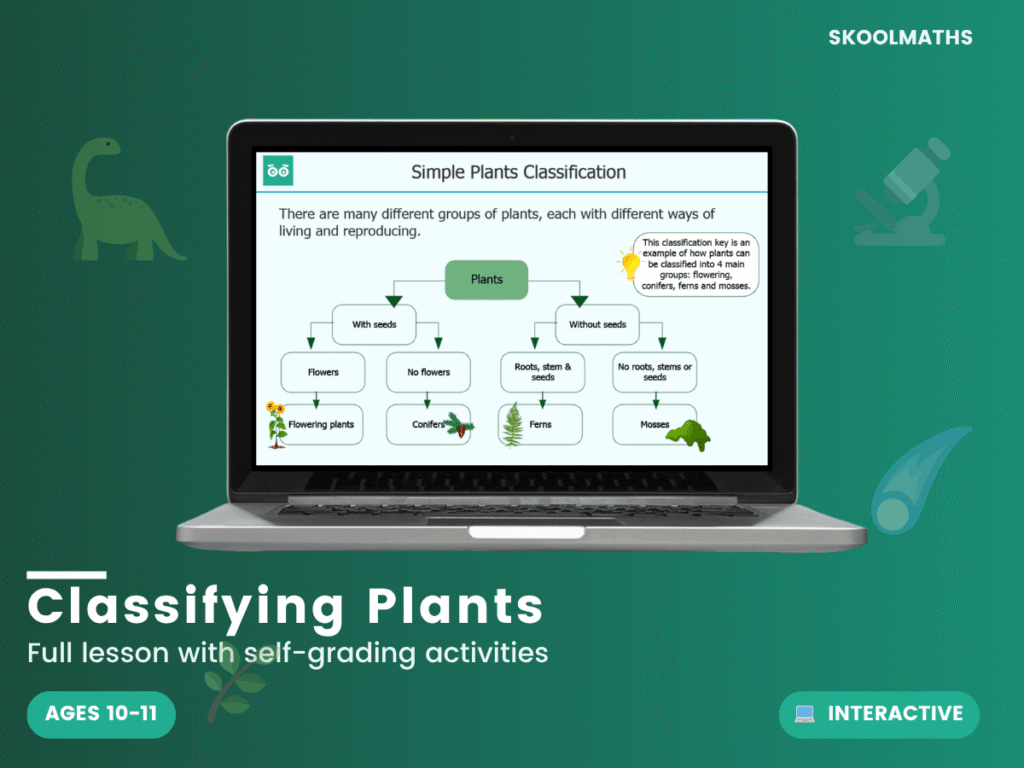
Did you know flowering plants make up 80% of all plants on Earth? This 23-slide interactive lesson teaches classifying plants into groups scientists actually use.
Pupils learn to identify and describe features of flowering and non-flowering plants, explain the difference between deciduous and evergreen trees, describe the key features of coniferous trees, including cones and needle-like leaves, and develop questions for classification keys. They see that scientists classify plants by looking at similarities and differences, and follow a classification key that divides plants into four main groups: flowering, conifers, ferns and mosses.
A dependable addition to a Year 6 science topic, giving pupils a genuine introduction to how scientists classify the plant kingdom. This is a natural progression from simpler KS1 plant lessons into proper scientific classification.
Build confident classification skills today — Add to Basket.
What year group is this for?
Year 6 (ages 10–11), KS2.
Does it cover classification keys?
Yes — pupils use and develop questions for a classification key.
Is it self-marking?
Yes, with instant feedback on the questions.
| Year Group | Year 6 Science |
|---|---|
| Resource Type | 🎓 Interactive Lesson & Activities |
| Format | Digital Only |
| Curriculum | England & Wales — KS2 (Year 6) |
| Added | 4 March 2026 |
Membership unlocks this resource plus every lesson, worksheet and activity — all subjects, all year groups, all in one place.


Reviews
There are no reviews yet.