One-time purchase. Instant digital download.
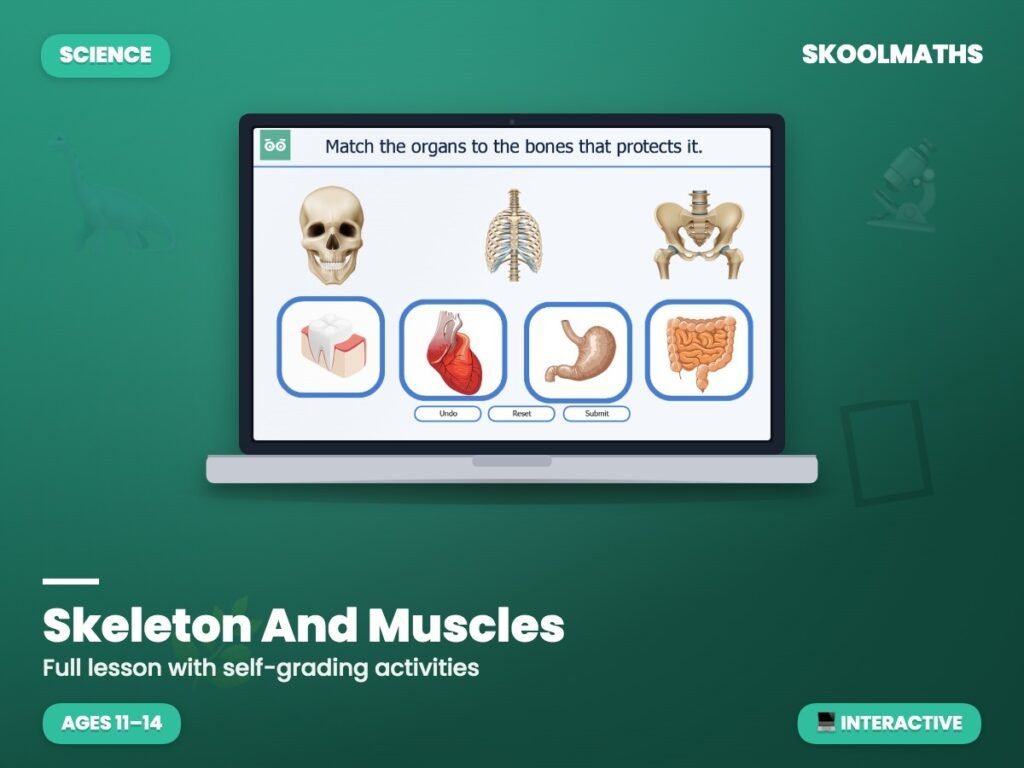
Can your students name the bones that protect the heart? This 45-slide interactive lesson teaches the skeleton and muscles, from function to labelling real bones.
Students learn to understand the functions of the skeleton, explain its various features, relate images of bones, muscles and joints to diagrams and the body, and distinguish between vertebrates and invertebrates. They learn that the skull protects the brain, the ribs protect the heart and lungs, and joints such as knees and ankles are where two or more bones meet. A drag-and-drop activity labels named bones, including the vertebra, patella, fibula, phalanges, tarsus, pelvis, mandible and clavicle.
A dependable addition to a KS3 biology topic, giving students a clear route from the function of the skeleton to naming its parts. Confidence here supports later work on the muscular system and movement.
Build confident biology skills today — Add to Basket.
What year group is this for?
KS3 — Years 7–9 (ages 11–14).
Does it cover vertebrates and invertebrates?
Yes — alongside the skeleton topic.
Is it self-marking?
Yes, with instant feedback on the questions.
| Year Groups | Year 7–9 |
|---|---|
| Resource Type | 🎓 Interactive Lesson & Activities |
| Format | Digital Only |
| Curriculum | England & Wales — KS3 (Years 7–9) |
| Added | 30 June 2022 |
Membership unlocks this resource plus every lesson, worksheet and activity — all subjects, all year groups, all in one place.


Reviews
There are no reviews yet.