Identifying and Naming 3D Shapes
Ages 3-5
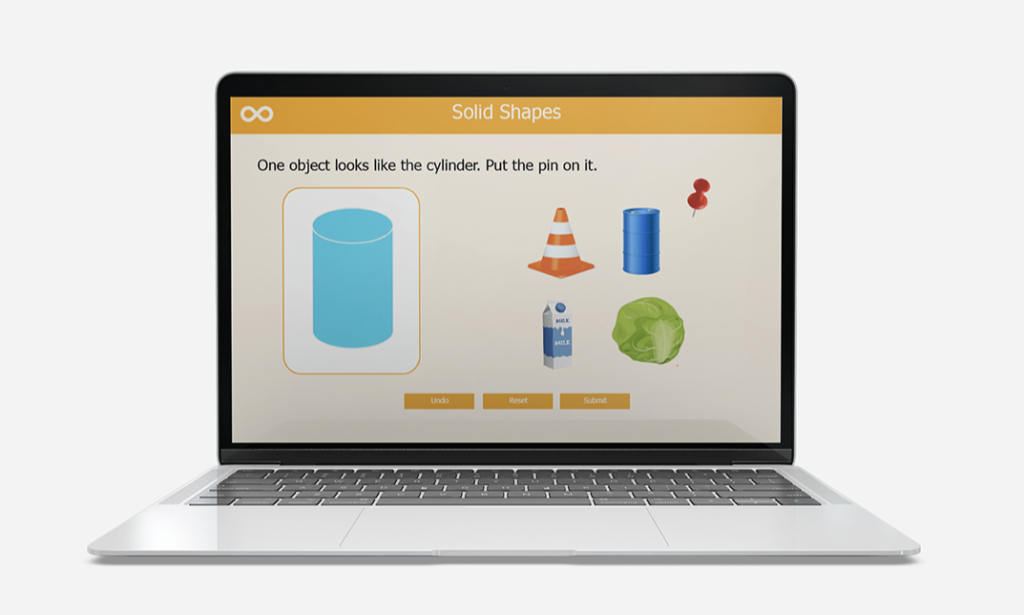
Students will identify and classify cubes, spheres, cones, and cylinders, create structures, and use spatial reasoning to match shapes they encounter in their environment. Fun, hands-on learning!
Description
By the end of this unit, children will be able to:
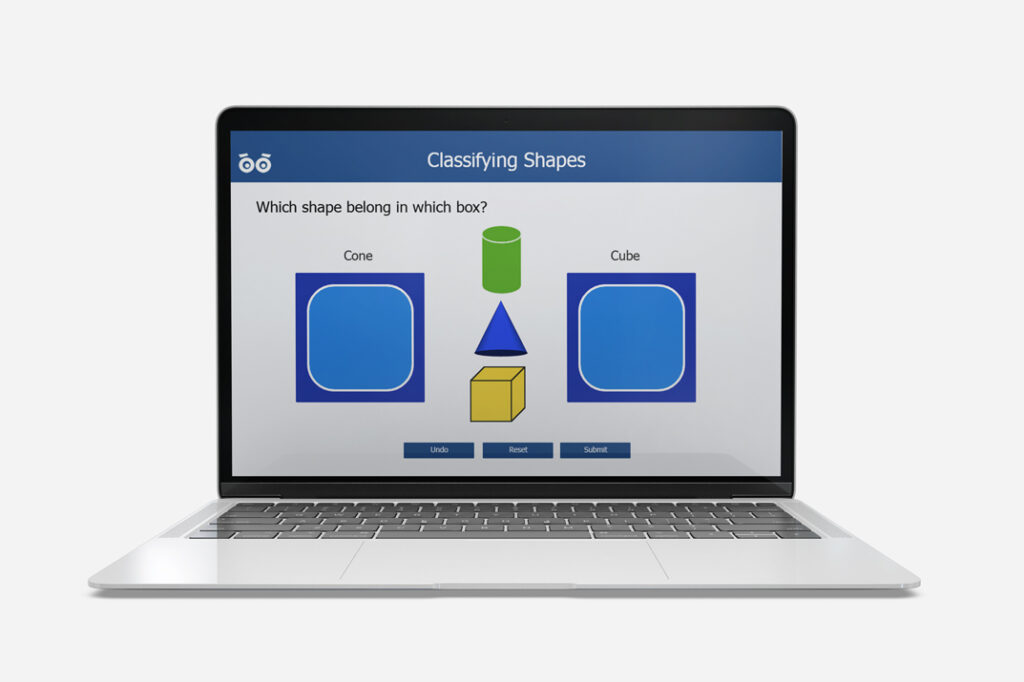
- identify and name basic solid shapes, such as cubes, spheres, cones, and cylinders.
- sort and classify objects by their shape attributes, such as the number of faces, edges, or corners.
- use solid shapes to create simple structures and designs, such as stacking cubes to make a tower or arranging cones in a pattern.
- use spatial reasoning to identify and match solid shapes, such as finding a sphere that is the same size as a cube.
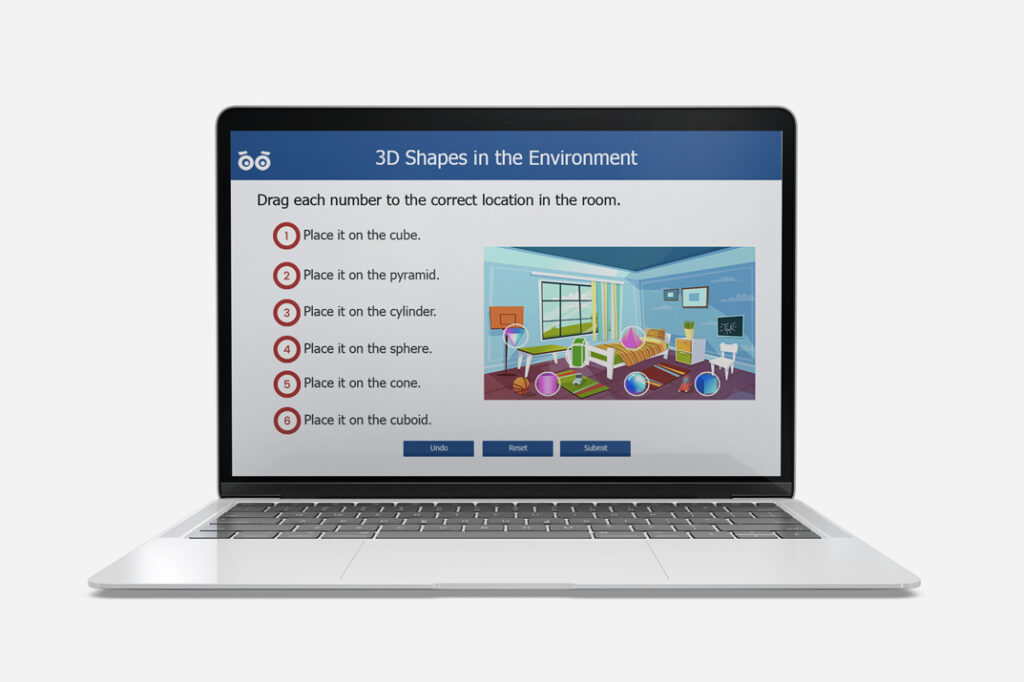
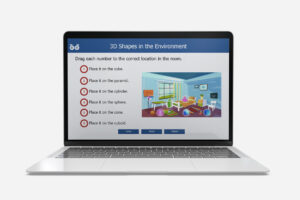
- recognize and describe the solid shapes they see in their environment, such as the shapes of toys, household items, and natural objects.
- use solid shapes to create representations of objects and ideas, such as using a cylinder to represent a tree trunk or a cone to represent a party hat.
Video Preview
Target Ages
- Age: 3-5
- England & Wales: Reception
- Scotland: Reception
- Rep. Ireland: Jr. Infants
- Australia: Preschool
- USA: Pre-K
What's Included
- Three-part Lesson
- Self-marking Activities
- Fluency, Reasoning and Problem-solving Questions.
- Engaging Drag and Drop Activities
- Interactive Self-marking Worksheet
- Printable Worksheets to Consolidate Learning
Links to curriculum
- Development Matters − Reception − Select, rotate and manipulate shapes to develop spatial reasoning skills.
- Birth to 5 Matters − Range 6 − Investigates turning and flipping objects in order to make shapes fit and create models; predicting and visualising how they will look (spatial reasoning)