This site uses cookies for analytics and to improve your experience. By clicking Accept, you consent to our use of cookies. Learn more in our privacy policy.
Buy this Resource Join to Access all GCSE Maths Description By the end of this unit, students will be able to: understand that pie charts represents quantities as sectors of a circle and use this to illustrate data; draw pie charts. National Curriculum Objectives Key Stage 4: Statistics construct and interpret appropriate tables, charts, and […]
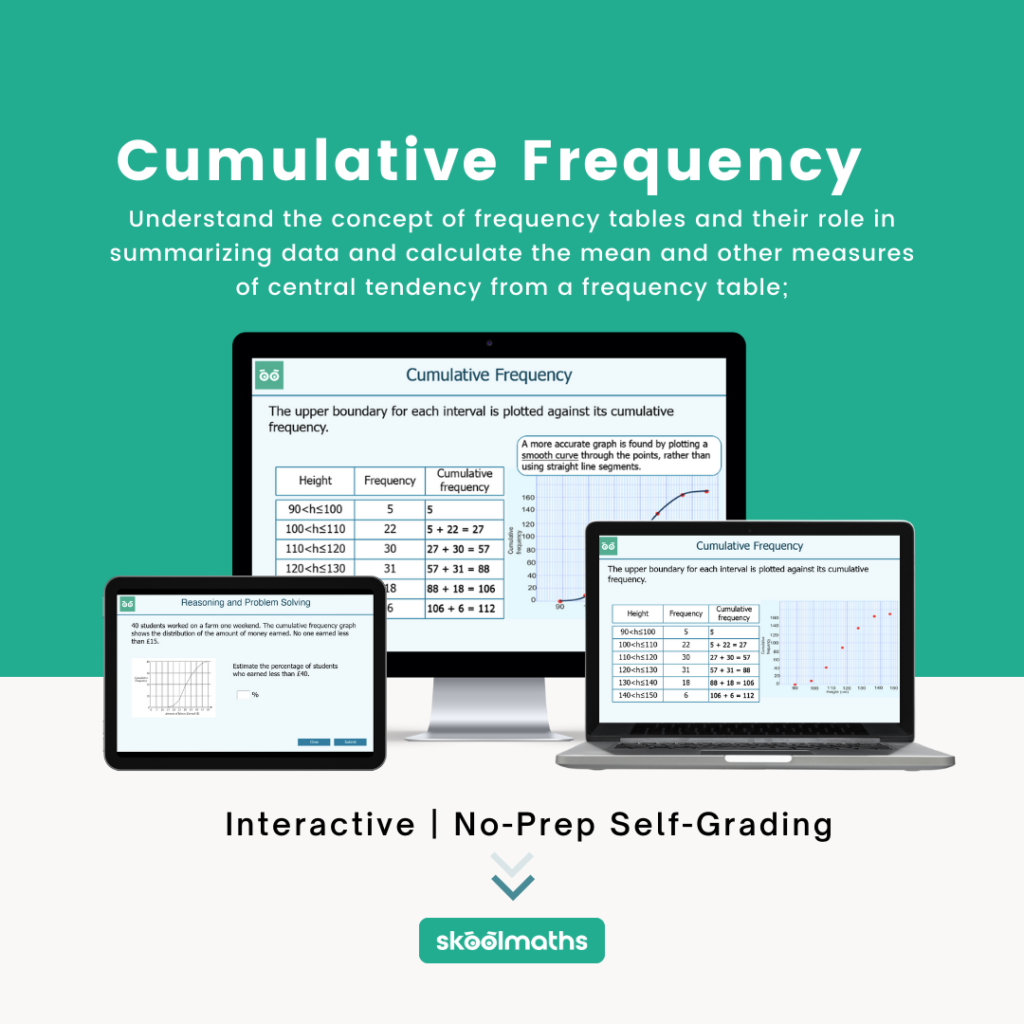
Understand the concept of cumulative frequency tables and their role in summarizing data and calculate the mean and other measures of central tendency from a frequency table.
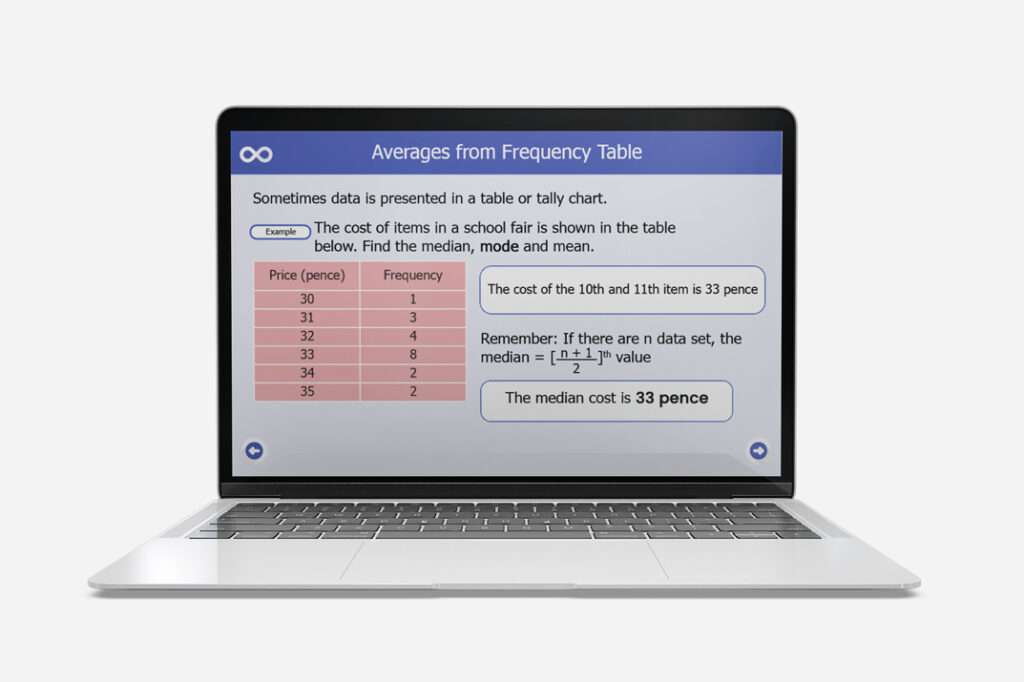
Become a Member Description By the end of this unit, students will be able to: understand the concept of frequency tables and their role in summarizing data; calculate the mean and other measures of central tendency from a frequency table; apply the concept of frequency tables to real-world data scenarios. National Curriculum Objectives Key Stage […]
Develop your GCSE Maths student ability to construct and interpret histograms for different sets of data and analyze and draw conclusions from the information presented in histograms.
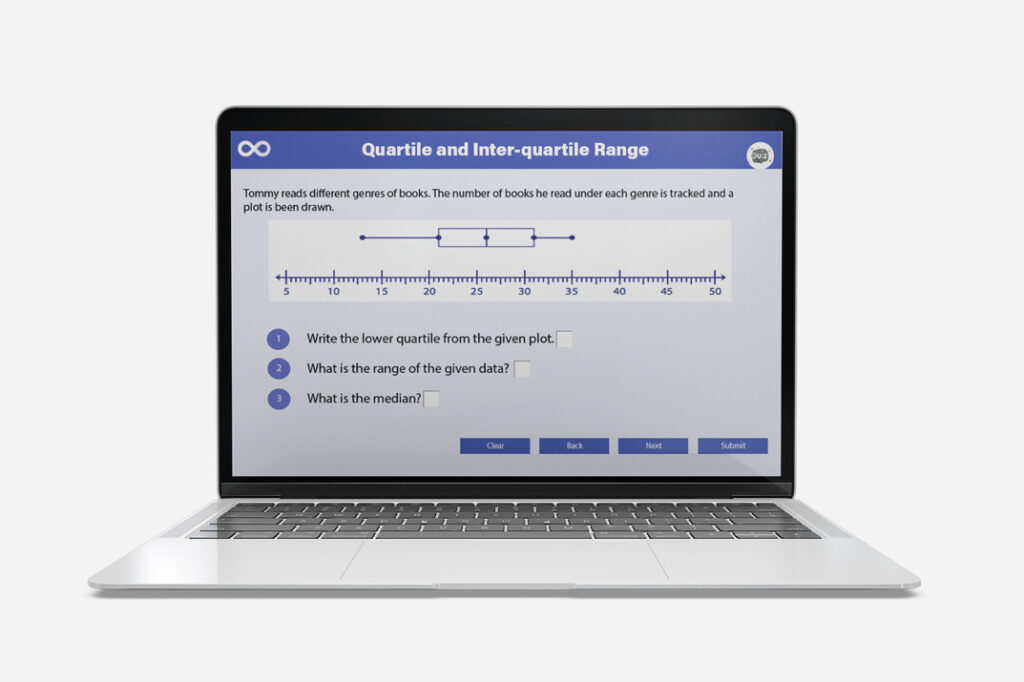
Become a Member Description By the end of this unit, students will be able to: understand the concept of quartiles and their role in data analysis; calculate quartiles and the interquartile range for a dataset interpret quartiles and the interquartile range to describe the spread of data. National Curriculum Objectives Key Stage 4: Statistics appropriate […]
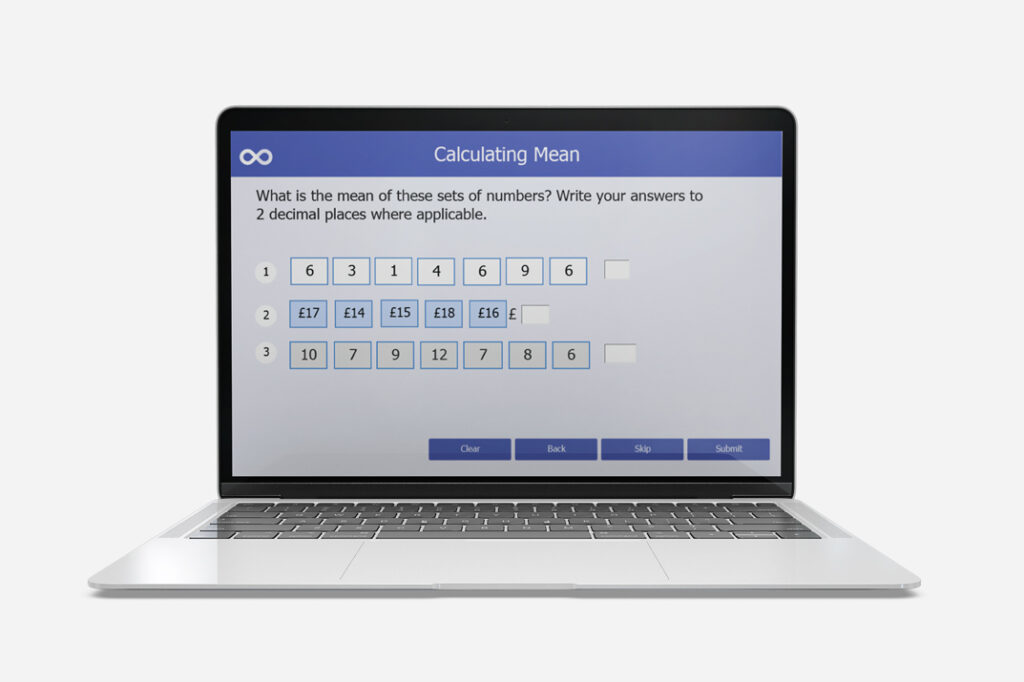
Become a Member Description By the end of this unit, students will be able to: understand the concept of different types of averages (mean, median, mode) and their applications; calculate the mean, median, and mode from a list of data; interpret and analyze the implications of different averages. National Curriculum Objectives Key Stage 4: Probability […]
Become a Member Description By the end of this unit, students will be able to: understand the concept of a line of best fit and its role in representing data trends; create a line of best fit for a given data set using appropriate techniques; interpret the line of best fit and make predictions based […]
Become a Member Description By the end of this unit, students will be able to: understand the purpose of box and whisker plots in summarizing data distributions; create and interpret box and whisker plots for different data sets; analyze and compare data sets using box and whisker plots. National Curriculum Objectives Key Stage 4: Statistics […]
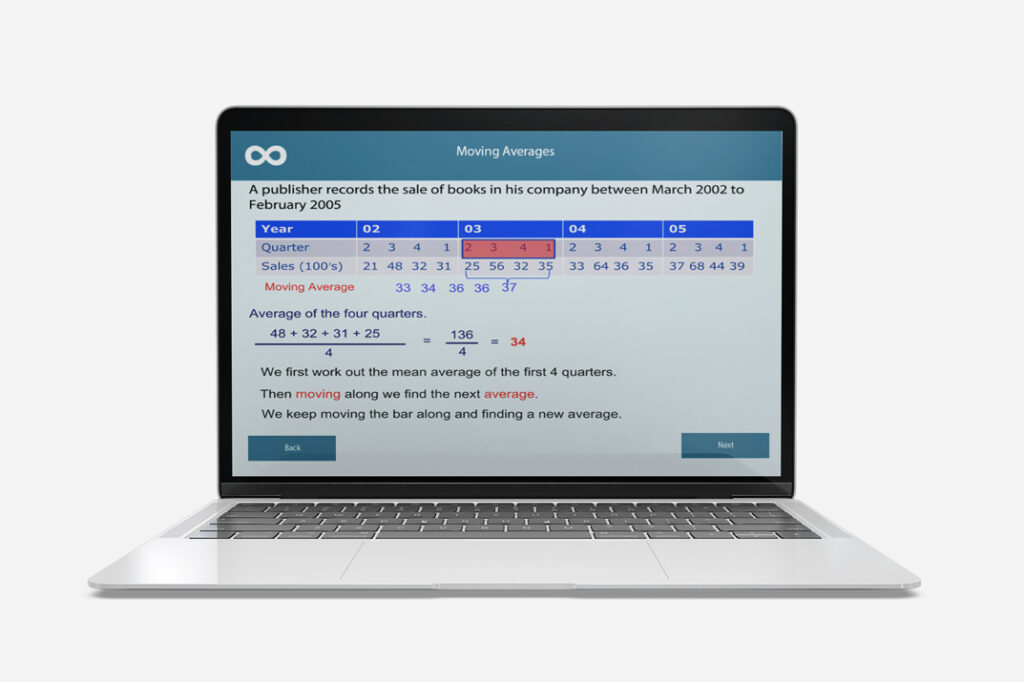
Become a Member Description By the end of this unit, students will be able to: understand the concept of moving averages and their role in data analysis; calculate simple moving averages and interpret their significance; apply moving averages to real-world data scenarios. National Curriculum Objectives Key Stage 4: Statistics appropriate measures of central tendency (including […]
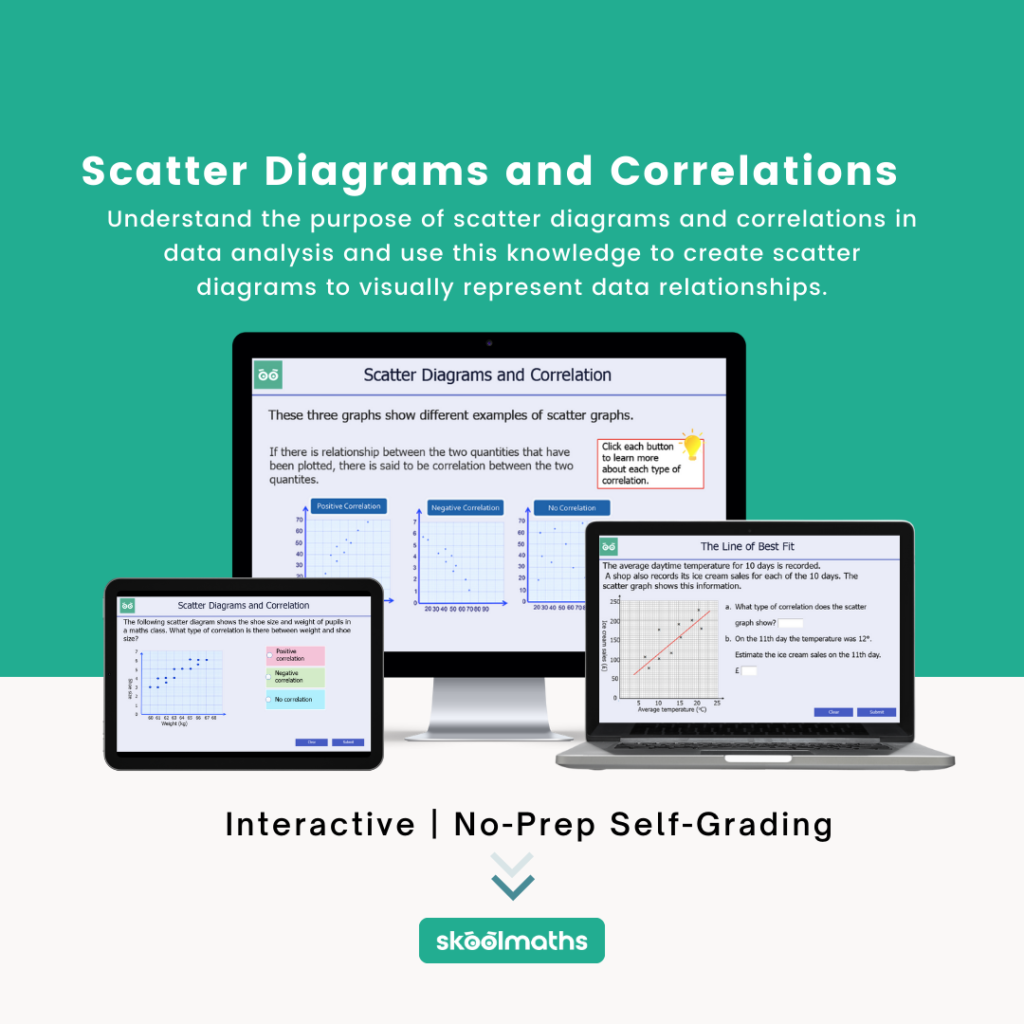
Understand the purpose of scatter diagrams and correlations in data analysis and use this knowledge to create scatter diagrams to visually represent data relationships.