One-time purchase. Instant digital download.
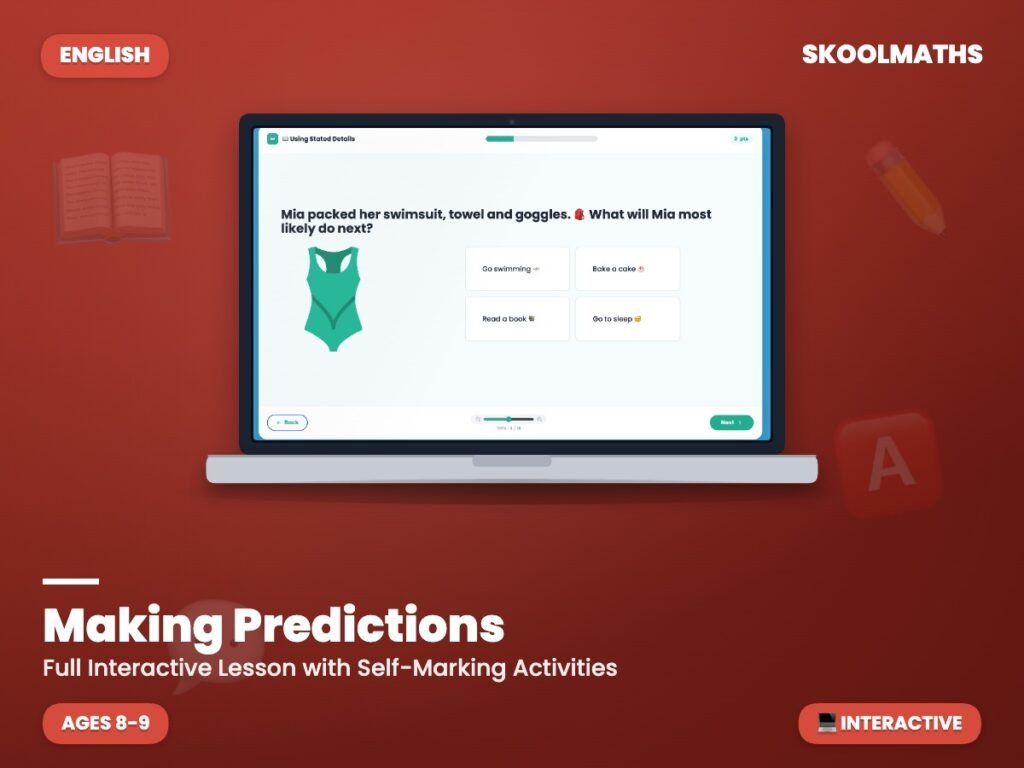
What clues tell you a storm is coming? This 20-slide interactive lesson teaches making predictions, showing pupils how to base a guess on real evidence from the text.
Pupils learn to use stated details to make predictions about what might happen next, use implied details and clues to predict events, and explain their predictions using evidence from the text. They learn that stated details are facts the author tells directly, such as the sky turning dark before a storm, while implied details are hidden clues, such as a character gripping a door handle to suggest fear. Pupils practise the sentence starter ‘I predict… because the text says…’ to link every prediction to real evidence.
A dependable addition to a Year 4 reading topic, giving pupils a structured way to predict and justify their thinking. Making evidence-based predictions is a skill examiners reward at every key stage.
Build confident prediction skills today — Add to Basket.
What year group is this for?
Year 4 (ages 8–9), KS2.
Does it cover implied details as well as stated ones?
Yes — both are taught and compared.
Is it self-marking?
Yes — the activities are self-marking, as the title says.
| Year Group | Year 4 English |
|---|---|
| Resource Type | 🎓 Interactive Lesson & Activities |
| Format | Digital Only |
| Curriculum | England & Wales — KS2 (Year 4) |
| Added | 10 June 2026 |
Membership unlocks this resource plus every lesson, worksheet and activity — all subjects, all year groups, all in one place.


Reviews
There are no reviews yet.