One-time purchase. Instant digital download.
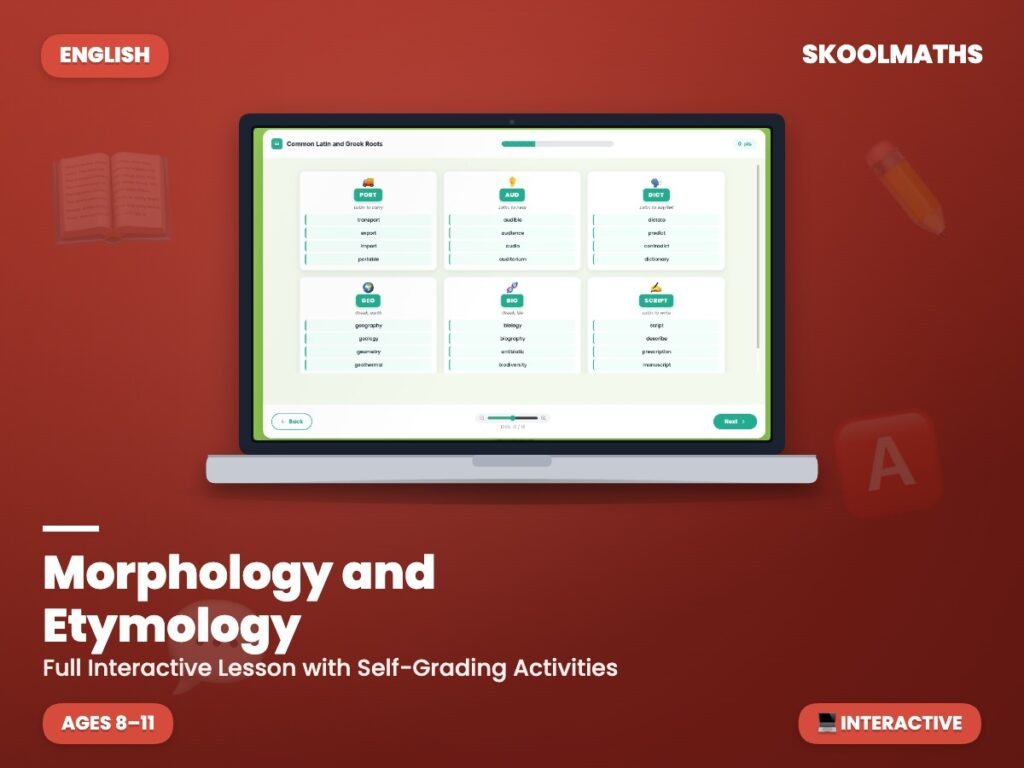
What is the smallest unit of meaning in a word? This 20-slide interactive lesson teaches morphology and etymology, showing pupils how words are built and where they come from.
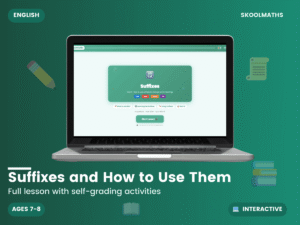
Pupils learn what morphology is and how to identify morphemes in words, recognise and use common root words from Latin and Greek, know how prefixes and suffixes change meaning, and understand where everyday English words come from. A morpheme is the smallest unit of meaning in a word, and root words such as ‘port’ (carry), ‘aud’ (hear) and ‘dict’ (say) unlock families of related words. Prefixes such as un-, dis- and re- change meaning, while suffixes such as -tion, -ment and -ful change word class.
A dependable addition to a KS2 vocabulary topic, giving pupils the bigger picture of how English words are constructed and where they come from. This broader view of morphology complements a more focused root-words lesson.
Unlock word structure with confidence — Add to Basket.
What year group is this for?
Years 4–6 (ages 8–11), KS2.
How is this different from a root words lesson?
It covers morphemes and etymology more broadly, alongside roots, prefixes and suffixes.
Is it self-marking?
Yes, with instant feedback on the questions.
| Year Groups | Year 4–6 |
|---|---|
| Resource Type | 🎓 Interactive Lesson & Activities |
| Format | Digital Only |
| Curriculum | England & Wales — KS2 (Years 4–6) |
| Added | 10 June 2026 |
Membership unlocks this resource plus every lesson, worksheet and activity — all subjects, all year groups, all in one place.

Reviews
There are no reviews yet.