
Included in every Skoolmaths plan
Questions are marked automatically as pupils answer: a sound and a character reaction show straight away whether they are right, and correct answers earn points, with a results screen at the end.
A 32-slide interactive lesson that runs in any web browser on a computer, tablet or interactive whiteboard. Members open it online from their year group page. Buying it on its own gives you a .zip download to unzip and open.
Free preview: try the first slides before you decide. Included in every Skoolmaths plan.
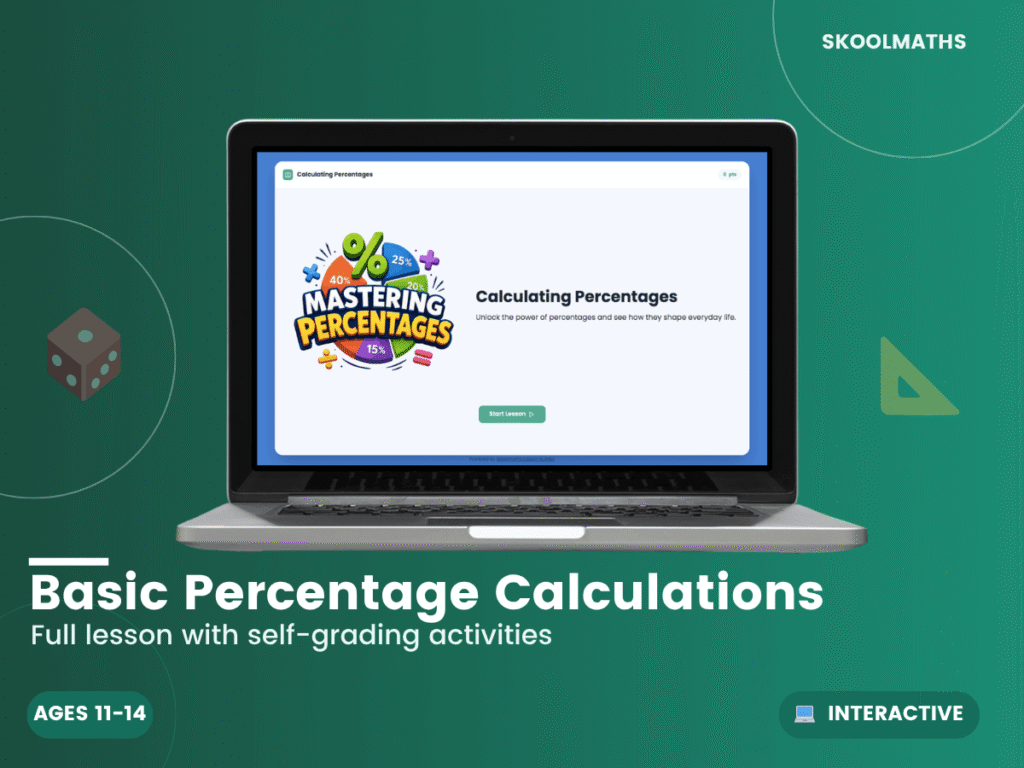
Can your students work out a sale price? This interactive lesson builds confidence in basic percentage calculations using real-life contexts.
The lesson objective is to calculate simple percentages, including in context. Students find a percentage of a quantity, such as 75% of 60 tickets, and use the complement of a percentage, for example working out the percentage of girls when 35% of a class are boys. They also calculate sale prices, such as 20% off £40, and compare which of two reductions is greater. Calculator use is allowed. Contexts include a shop’s t-shirts, concert tickets and sharing earnings between two friends.
A dependable addition to a KS3 percentages unit, giving students plenty of practice applying percentages to everyday problems. These skills lead naturally into percentage change and financial maths.
Make percentages practical — Add to Basket.
What year group is this for? KS3 — Years 7–9 (ages 11–14).
Does it include sale-price questions? Yes — students calculate reductions and new prices.
Can students use a calculator? Yes, calculator use is allowed.
| Year Groups | Year 7–9 |
|---|---|
| Resource Type | 🎓 Interactive Lesson & Activities |
| Format | Digital Only |
| Curriculum | England & Wales — KS3 (Years 7–9) |
| Added | 4 March 2026 |
Membership unlocks this resource plus every lesson, worksheet and activity — all subjects, all year groups, all in one place.
Free: our First Two Weeks Starter Pack
Eight print-and-go pages for a calm start with a new class, plus new lessons as we add them. About two emails a month.
Reviews
There are no reviews yet.