One-time purchase. Instant digital download.
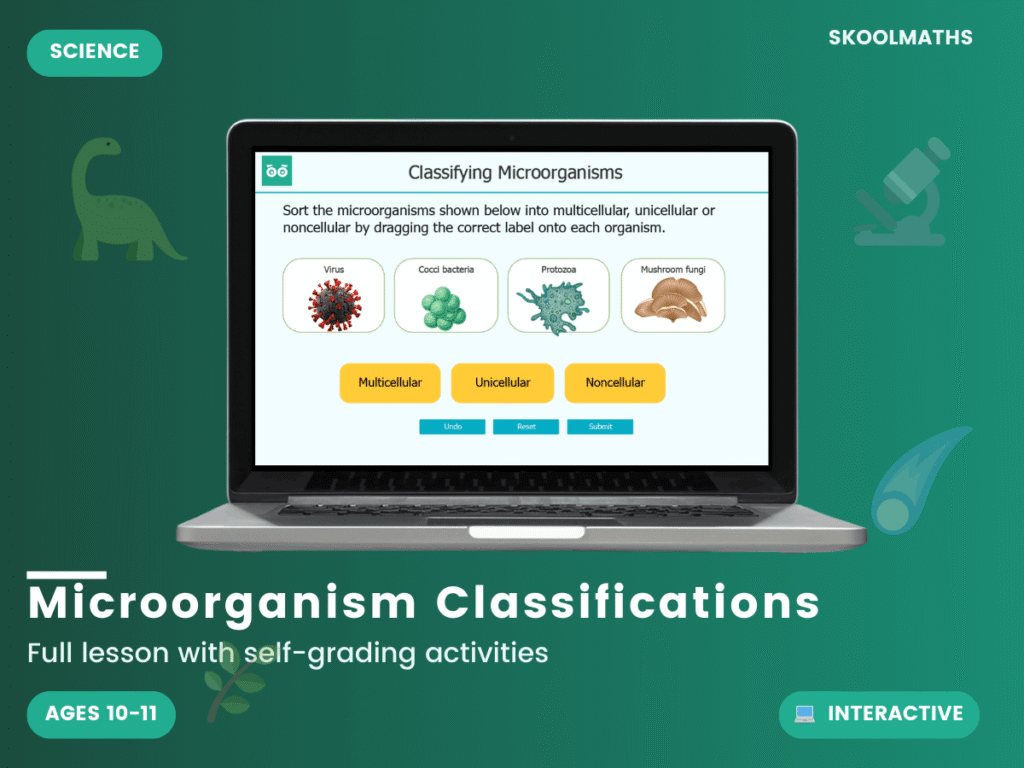
Can a virus reproduce without a host cell? This 26-slide interactive lesson teaches classifying microorganisms into their major groups and what makes each one different.
Pupils learn to classify different types of microorganisms, including bacteria, viruses, fungi and protozoa, based on their characteristics, understand how microorganisms are grouped by common observable features, and understand their roles in the environment and human health. They learn that bacteria are single-celled organisms that can cause illness, that fungi reproduce using spores and can be unicellular or multicellular, and that viruses cannot reproduce without a host cell, unlike plants, which make their own food through photosynthesis.
A dependable addition to a Year 6 science topic, giving pupils a clear route into classifying the microscopic world around them. This pairs naturally with classifying plants for a well-rounded classification topic before KS3 biology.
Build confident classification skills today — Add to Basket.
What year group is this for?
Year 6 (ages 10–11), KS2.
Does it cover the roles of microorganisms in health?
Yes — alongside their environmental roles.
Is it self-marking?
Yes, with instant feedback on the questions.
| Year Group | Year 6 Science |
|---|---|
| Resource Type | 🎓 Interactive Lesson & Activities |
| Format | Digital Only |
| Curriculum | England & Wales — KS2 (Year 6) |
| Added | 4 March 2026 |
Membership unlocks this resource plus every lesson, worksheet and activity — all subjects, all year groups, all in one place.

Reviews
There are no reviews yet.