One-time purchase. Instant digital download.
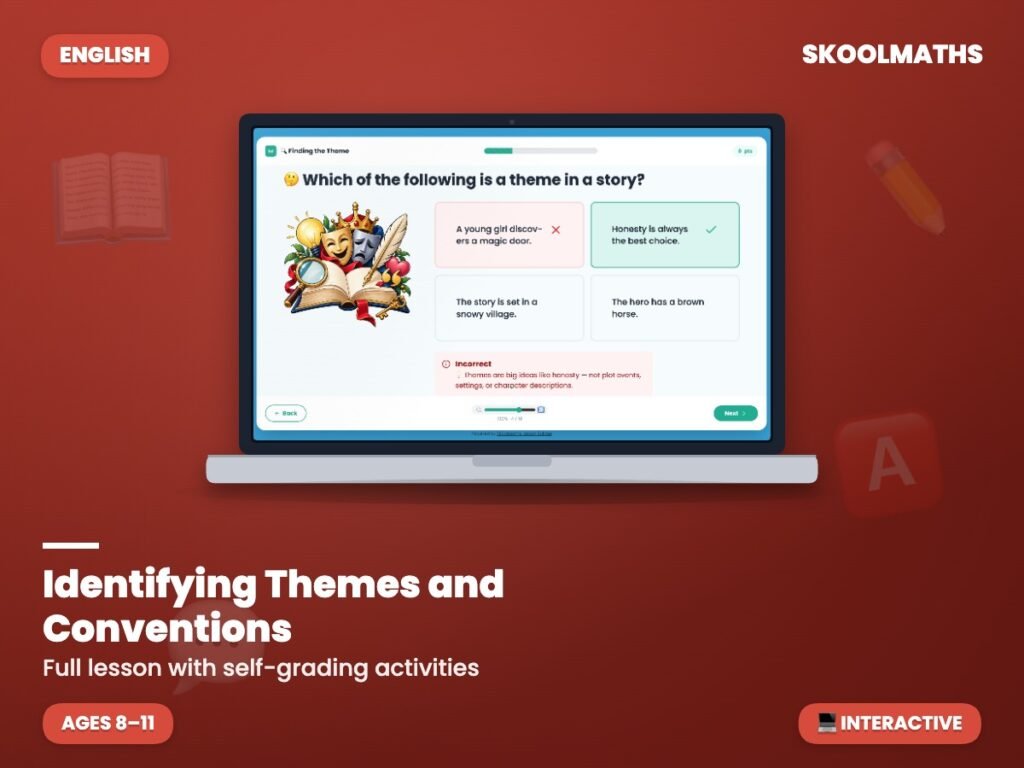
What is the difference between a story’s plot and its theme? This 20-slide interactive lesson teaches identifying themes and conventions across different story genres.
Pupils learn to identify themes in a text, understand common conventions of story genres, and practise spotting both in examples. They learn that a theme is the big idea behind a story, such as friendship or courage, which the author never usually states directly but which must be inferred from what the main character learns. Conventions are the typical features of a genre, such as a villain, a hero and a happy ending in fairy tales, a quest and a brave hero in adventure stories, or a puzzle and clues in mystery stories, and pupils see how the same theme, such as courage, can appear across several genres.
A dependable addition to a KS2 reading topic, giving pupils a genuine strategy for looking beyond the plot to a story’s deeper meaning. Spotting themes and conventions is exactly what higher-level comprehension questions expect.
Build confident reading skills today — Add to Basket.
What year group is this for?
Years 4–6 (ages 8–11), KS2.
Does it compare different genres?
Yes — fairy tales, adventure stories and mystery stories.
Is it self-marking?
Yes, with instant feedback on the questions.
| Year Groups | Year 4–6 |
|---|---|
| Resource Type | 🎓 Interactive Lesson & Activities |
| Format | Digital Only |
| Curriculum | England & Wales — KS2 (Years 4–6) |
| Added | 10 June 2026 |
Membership unlocks this resource plus every lesson, worksheet and activity — all subjects, all year groups, all in one place.


Reviews
There are no reviews yet.