One-time purchase. Instant digital download.
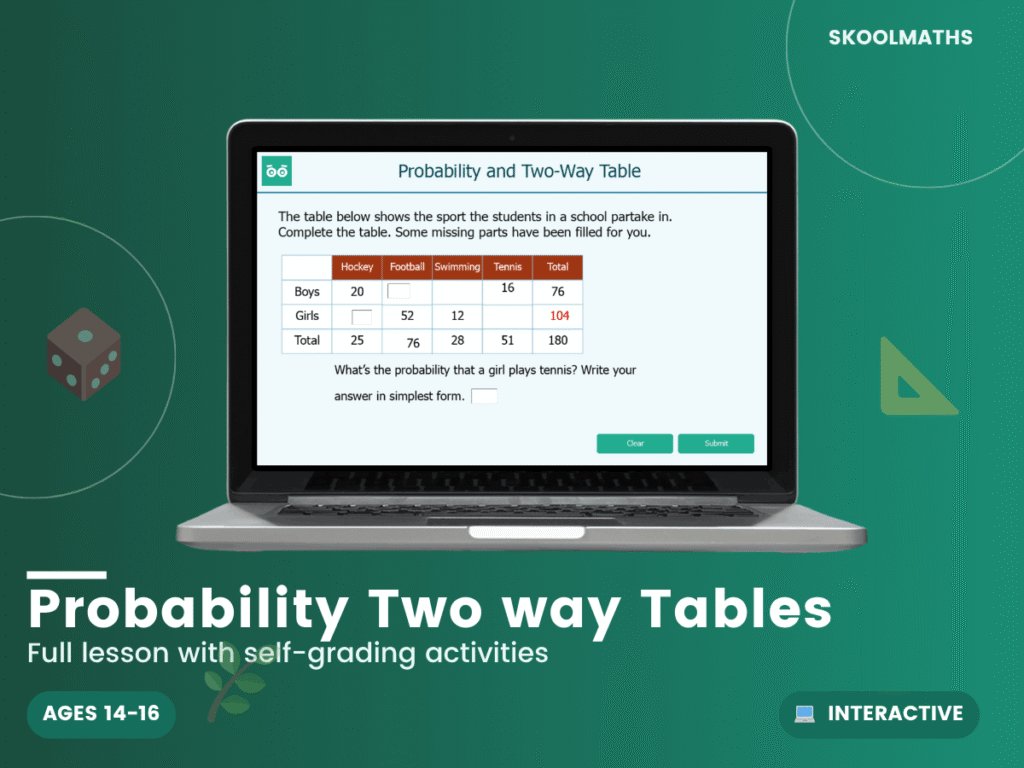
How do you find a probability from a two-way table? This 34-slide interactive lesson teaches probability with two-way tables, from reading a table to conditional probability.
Students learn to interpret and analyse data in two-way tables, where one variable is shown in the rows and the other in the columns. They use row and column totals to find missing values, then use probability as the number of favourable outcomes divided by the total number of outcomes, usually the grand total. The lesson finishes with conditional probability: the probability of an event given that another event has already occurred.
A dependable addition to a GCSE probability topic, giving students a clear method for tables that appear regularly in exams. Confidence here supports work on Venn diagrams, independent events and conditional probability.
Build confident probability skills today — Add to Basket.
What year group is this for? Years 10–11 (ages 14–16), GCSE.
Does it cover conditional probability? Yes — using two-way tables.
Is it self-marking? Yes, with instant feedback on the questions.
| Year Groups | Year 10–11 |
|---|---|
| Resource Type | 🎓 Interactive Lesson & Activities |
| Format | Digital Only |
| Curriculum | England & Wales — KS4 (Years 10–11) |
| Added | 22 April 2019 |
Membership unlocks this resource plus every lesson, worksheet and activity — all subjects, all year groups, all in one place.

Reviews
There are no reviews yet.