15 curriculum-aligned multiplication and divisions resources for Year 5 Maths — worksheets and digital lessons, or unlock everything with a membership.
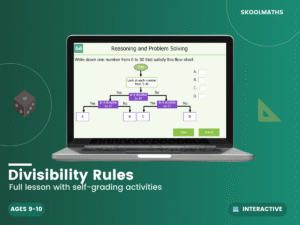
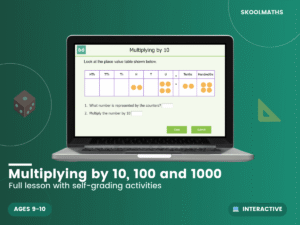


Membership unlocks every lesson, worksheet and activity — for every subject and year group.
Year 5 introduces factors, primes, squares and cubes, and formal written methods for multiplying and dividing larger numbers, including long multiplication for the first time.
By the end of Year 5, the National Curriculum expects pupils to:
multiple, factor, factor pair, prime number, composite number, square number, cube number, long multiplication, short division, remainder
Year 5 builds directly on the times tables secured by the end of Year 4. In Year 6, pupils use these written methods fluently alongside fractions, ratio and algebra, ready for secondary school.
What is a prime number?
A number greater than 1 with exactly two factors: 1 and itself. 7 is prime because only 1 × 7 = 7; 8 is not, because 2 × 4 = 8 as well as 1 × 8.
What does “squared” mean?
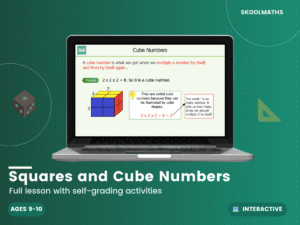
Multiplying a number by itself. 5² (5 squared) means 5 × 5 = 25. “Cubed” means multiplying a number by itself twice more: 5³ = 5 × 5 × 5 = 125.
How should a remainder be interpreted?
It depends on the question. 22 ÷ 4 = 5 remainder 2, but if the question asks how many whole boxes of 4 you can fill, the answer is 5; if it asks how many boxes you need for all 22 items, the answer is 6.
Start with our free resources, or get every Year 5 maths lesson with a membership.


